Dosing MgSO4 in Drip Irrigation Systems
- Share
- publisher
- MgSO4 Group Limited
- Issue Time
- Nov 18,2026
Summary
Dose MgSO4 through drip irrigation without clogging lines or unbalancing feed.
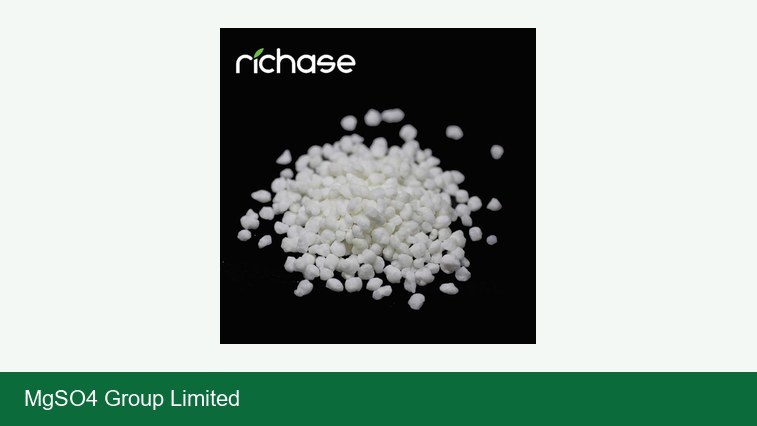
Fertigation Needs a Fully Soluble Grade
A soluble magnesium sulphate grade is the starting point for any drip programme, because anything that does not dissolve completely ends up in the filter or the emitter. MgSO4 Group Limited recommends checking the insoluble fraction and dissolution behaviour before the assay figure.
Cold stock-tank water in winter slows dissolution even for a good crystal. Pre-dissolving in a separate vessel with agitation removes most of the seasonal variation growers report.
MgSO4 Drip Irrigation Basics
MgSO4 drip irrigation delivers magnesium directly to the active root zone in small, frequent doses. That suits greenhouse tomato, pepper and cucumber crops, where demand is continuous and the root volume is limited.
The method also reduces fixation losses compared with a single broadcast application, but it demands consistent water quality and a clean injection system. Uneven injection shows up as uneven crop colour within a single block.
Magnesium Sulphate Fertigation Setup
A sound magnesium sulphate fertigation layout uses a dedicated stock tank for magnesium, a calibrated injector and a filter downstream of the mixing point. Keep calcium concentrates in a separate tank and never combine them at stock strength.
Flush the injection line with clean water at the end of each cycle. Residual sulphate and calcium meeting in a stagnant line is a common source of the precipitate that blocks emitters.

MgSO4 drip irrigation — Magnesium Sulphate Heptahydrate 99% (Epsom Salt) 0.1-1mm crystal powder from MgSO4 Group Limited — view product: https://www.mgso4.com/pid18135906/Magnesium-Sulphate-Heptahydrate-99-Epsom-Salt-0-1-1mm-crystal-powder.htm
Drip Irrigation Dosing Calculations
Drip irrigation dosing should be calculated from the target magnesium concentration in the final diluted feed, then converted backwards to a stock solution concentration and an injector ratio. Work in mg per litre of Mg, not in percent of a product.
Account for the magnesium already present in the source water. Hard water can supply a meaningful part of the crop requirement, and ignoring it is the easiest way to over-dose a programme.
Fertigation Compatibility Checks
Run a fertigation compatibility jar test before changing any component. Mix the intended stock solutions at the actual dilution and temperature, let them stand, and look for cloudiness, sediment or a pH shift.
Pay particular attention to calcium nitrate, phosphate and concentrated sulphate combinations. Most incompatibility problems are visible within an hour in a jar but only after weeks in a drip line.
Magnesium Sulfate Heptahydrate Handling
Magnesium sulfate heptahydrate carries a high proportion of water of crystallisation, so its analysis and flow behaviour change if it dries out or absorbs moisture in storage. Keep bags sealed, off the floor and away from a direct heat source.
Specify the particle band that matches your stock tank. Fine powder dissolves fastest but is more prone to caking in a humid store, while sized crystal stays free-flowing and is easier to dose by volume.
Filtration and Line Protection
Install a filter rated for the emitter specification downstream of the injection point, and inspect it after the first week of a new programme. Any persistent residue points to dissolution or compatibility rather than to a mechanical fault.
Schedule a periodic clean-water flush of the laterals. In a long winter cycle, small accumulations in the far end of a line become visible as a gradient in crop colour.
Monitoring EC and Leaf Status
Track the electrical conductivity of the feed before and after magnesium injection, and keep a simple log. A rising EC with an unchanged recipe usually indicates a concentration or evaporation issue in the stock tank.
Combine the numbers with a visual check for interveinal chlorosis on older leaves. Solution data tells you what you dosed; the crop tells you what it actually received.
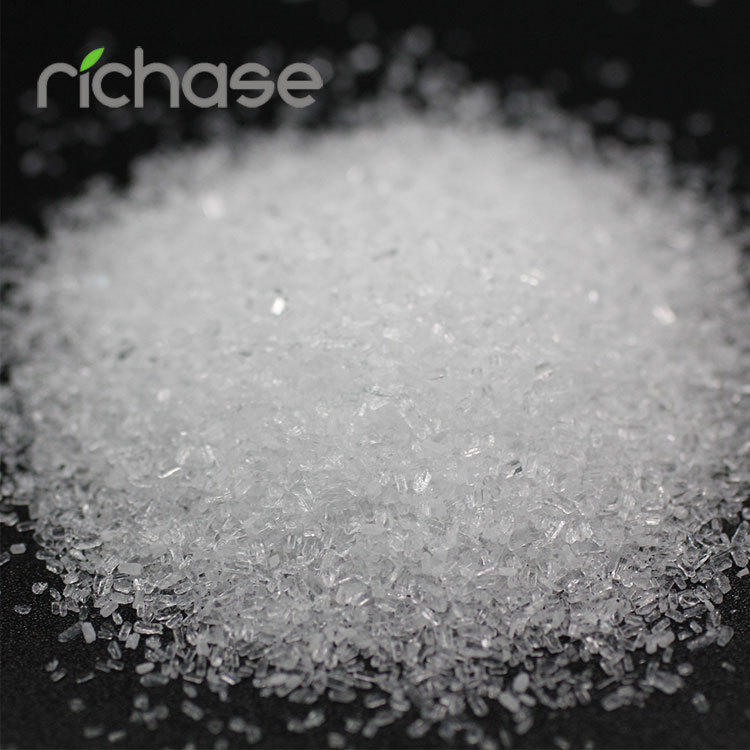
magnesium sulphate fertigation — Magnesium Sulphate Heptahydrate (Epsom Salt)98% 0.1-1mm crystal powder
Practical Dosing Checklist
Before the season: fix the grade and particle band, run a jar test, calibrate the injector and record the source-water analysis. During the season: log EC, inspect the filter weekly and re-test leaf tissue monthly.
MgSO4 Group Limited can supply a soluble grade with a per-lot COA and a retained reference sample. Share your stock-tank temperature, injector ratio and target Mg level for a grade-matched recommendation.
Share your grade, quantity and destination with MgSO4 Group Limited for a specification-matched quotation and documented lead time.